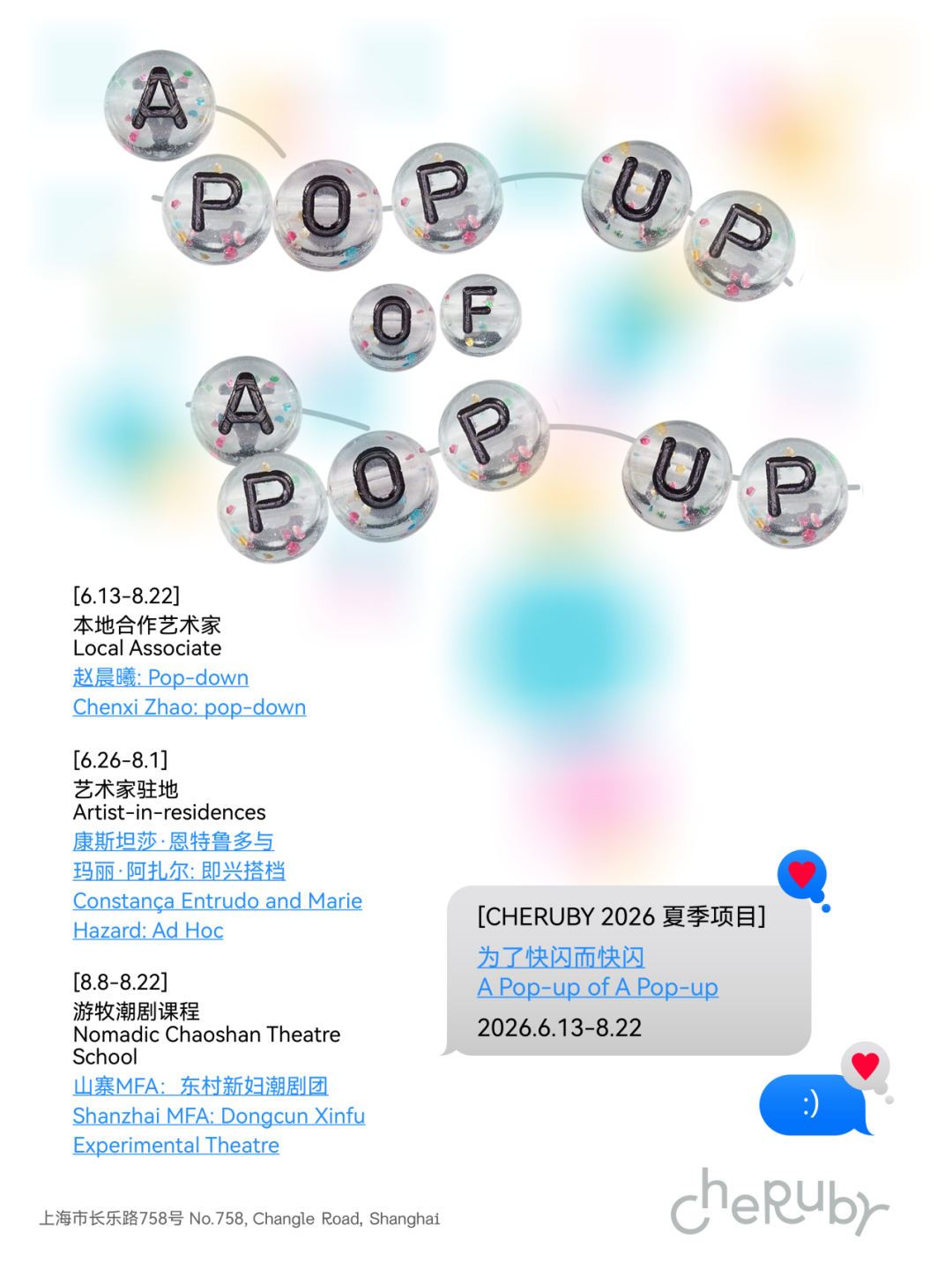

A Pop-up of A Pop-up
In a cultural landscape that constantly competes for attention, what is the role of the pop-up? Is it a celebration, a satire, or a form that has become content in itself?
When a notification appears on a phone, it arrives as an alert loaded with content. Increasingly, there is more content about content than content itself. Streams of gameplay, reaction videos, reviews, and commentary all function as forms of para-content: content that circulates around other content. A Pop-up of A Pop-up becomes a form of para-content IRL. It invites participation, disrupting the binary between consumption and production. Rather than producing a stable object of attention, para-content continually redirects attention through circulation, response, and reproduction. Meaning is generated not solely through the original content itself, but through the relations, interpretations, and forms of participation that accumulate around it.
A Pop-up of A Pop-up is a monthly summer activation occupied with dialogical movement within a curatorial programme by bringing together an exhibition, a pair of artists-in-residence, and a “low-res” summer MFA to respond to questions of collectivity, cross-disciplinary collaboration, and alternative pedagogy. Inherently dynamic and resistant to permanence and standardisation, the programme offers experiences that are local, contingent, and responsive to their surroundings. If para-content generates meaning through circulation and participation, then the programme treats exhibitions, residencies, and pedagogical encounters as sites through which new social, creative, and intellectual relations can emerge.
The programme unfolds as a series of Events in the Deleuzian sense: not as discrete happenings, but as transformations in relations, meanings, and possibilities that emerge through what happens. The Event is not located in any single exhibition, residency, or public programme, but in the encounters produced between them. A Pop-up of A Pop-up features local associate Zhao Chenxi’s exhibition Pop Down; summer artists-in-residence AD HOC by Constança Entrudo and Marie Hazard; and Shanzhai MFA, a nomadic theatre school run by Dongcun Xinfu Experimental Theatre. A Pop-up of A Pop-up asks how cultural value might be produced, circulated, and sustained through collective forms of making, learning, and living.
13 June – 22 August
Exhibition
Chenxi Zhao: Pop-down
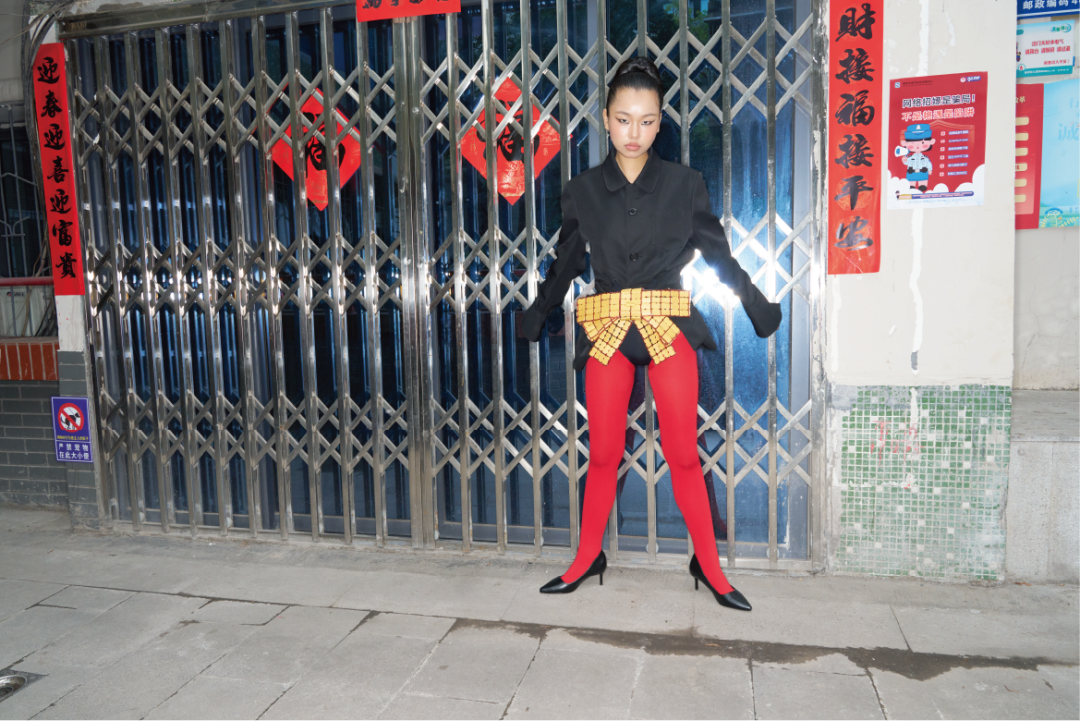
Pop-down begins with a reversal. If a pop-up is a temporary retail format through which brands redefine relationships, test new concepts, and engage with consumers in novel ways, Zhao’s exhibition turns this logic upside down. Developed during his month-long residency at CHERUBY following the closure of his label fabric qorn—a brand known for embracing and humorously reclaiming styles often deemed tasteless or unfashionable—Pop-down asks what remains after a brand comes to an end.
In response to the continued enthusiasm of fabric qorn’s community, Zhao transforms the pop-up from a site of consumption into one of participation. Through collective screen-printing sessions, he creates moments of shared experience that extend the social life of the brand beyond its commercial lifespan. Alongside the collective activities, the exhibition also turns inward. Works drawing from passing thoughts and doubts that arise in moments of reflection reveal the private and often mundane mental landscapes that accompany everyday life. Together, these gestures move between collective participation and personal introspection, proposing forms of value rooted not in metrics or visibility but in creativity, lived experience, and collective potential.
Pop-down blurs the distinction between fashion as an object and fashion as an exhibition, shifting attention from what is produced to social and value relations that persist after production ends.
Chenxi Zhao is the founder of the independent label fabric qorn, through which he has developed a distinct creative language shaped by everyday experience, cultural symbols, and bodily perception. While fashion remains a central medium, his work has increasingly expanded into installation, spatial intervention, moving image, and object-making, adopting a cross-disciplinary approach to questions of conception and perception.
Alongside his artistic practice, Zhao maintains a longstanding engagement with meditation, Buddhism, and embodied awareness. These influences inform an ongoing exploration of consciousness, impermanence, and everyday life, translating abstract spiritual reflections into works that invite physical encounter and lived experience.
26 June – 26 July
Artists-in-residence
Constança Entrudo and Marie Hazard: AD HOC
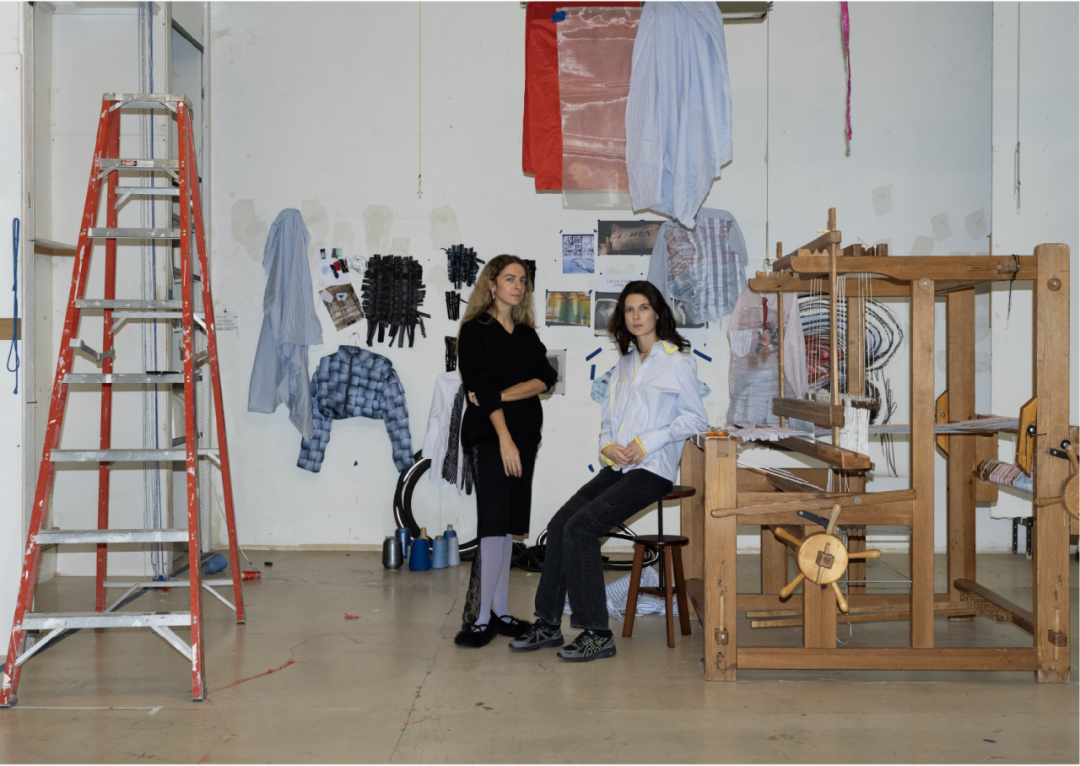
Since 2024, Paris-based artist Marie Hazard and Lisbon-based fashion designer Constança Entrudo have collaborated on AD HOC, a textile project that positions itself at the intersection of textile art and fashion, operating in the territory where artistic research meets the worn garment. Translated from Latin, ad hoc means “for this”—something devised for a specific situation rather than according to a permanent or predetermined plan. The project embraces this condition of responsiveness, unfolding through a sustained exchange of materials, techniques, and references between the two practitioners.
Anchored in a shared interest in textiles, AD HOC seeks not simply to bring art and fashion together but to unsettle the hierarchies that have otherwise separated them. Neither discipline is positioned in service of the other. Instead, the collaboration treats the textile as a common ground through which both practices can be rethought. Though distinct in approach, Hazard’s tactile compositions and Entrudo’s digitally layered textiles each investigate weaving as a language, probing the relationship between craft, technology, and material knowledge.
Central to the project is attention to time. Both Hazard and Entrudo consider the labour embedded within textile production and how contemporary technologies have transformed its temporal rhythms. Following a residency and exhibition at Studio2M in New York, AD HOC continues its development through their residency at CHERUBY, where contextual research, material experimentation, wearable sculpture, and performativity unfold simultaneously.
Marie Hazard (b. 1994, France) is a textile artist whose work bridges traditional craftsmanship and industrial textile processes. A graduate of Central Saint Martins, London, she combines weaving, digital printing, photography, painting, and literature to develop a distinctive material language that explores the relationship between image, textile, and memory.
Her work has been exhibited internationally, including at Dallas Contemporary (2025), Centre Tignous d’Art Contemporain, Montreuil (2025), the Alina Szapocznikow Foundation, Warsaw, Mobilier National and the Instituto Francés de América Latina, Mexico City (2024), Villa Belleville, Paris (2023), Galeria Mascota, Mexico City (2022), and the Tokyo Metropolitan Art Museum (2019). A recipient of the Clothworkers’ Material Fund Prize (2017), she was awarded the THREAD Residency at the Josef and Anni Albers Foundation, Senegal (2024), and selected for its Bethany residency programme (2027). In 2022, she co-founded Potyra, an art centre in Serra Grande, Brazil, supporting emerging artists.
Constança Entrudo is a Portuguese textile designer known for a fluid and experimental approach to fashion. After graduating from Central Saint Martins, London, with a BA in Textile Design specialising in print, she developed her practice working with studios including Balmain and Peter Pilotto before founding her own research and design studio and launching her namesake label in 2019.
Through original textiles, handcrafted garments, and material research, Entrudo investigates the relationship between craft, technology, and contemporary modes of production. Her practice is distinguished by innovative techniques spanning embroidery, weaving, digital printing, and dyeing, which she employs to reinterpret familiar forms and challenge conventional material narratives. Combining unexpected details with a youthful and contemporary sensibility, her work moves fluidly between fashion, textile design, art, and interiors.
Entrudo has presented collections at New York Fashion Week, Paris Fashion Week, and ModaLisboa, and collaborates with brands including Camper and Timberland, alongside industrial and artisanal partnerships that bridge traditional techniques with contemporary design. Her work is held in the collections of the Metropolitan Museum of Art, New York, and the Museu do Design e da Moda, Lisbon.
8 – 22 August
Drifting Chaoshan Theatre School
Shanzhai MFA: Dongcun Xinfu Experimental Theatre
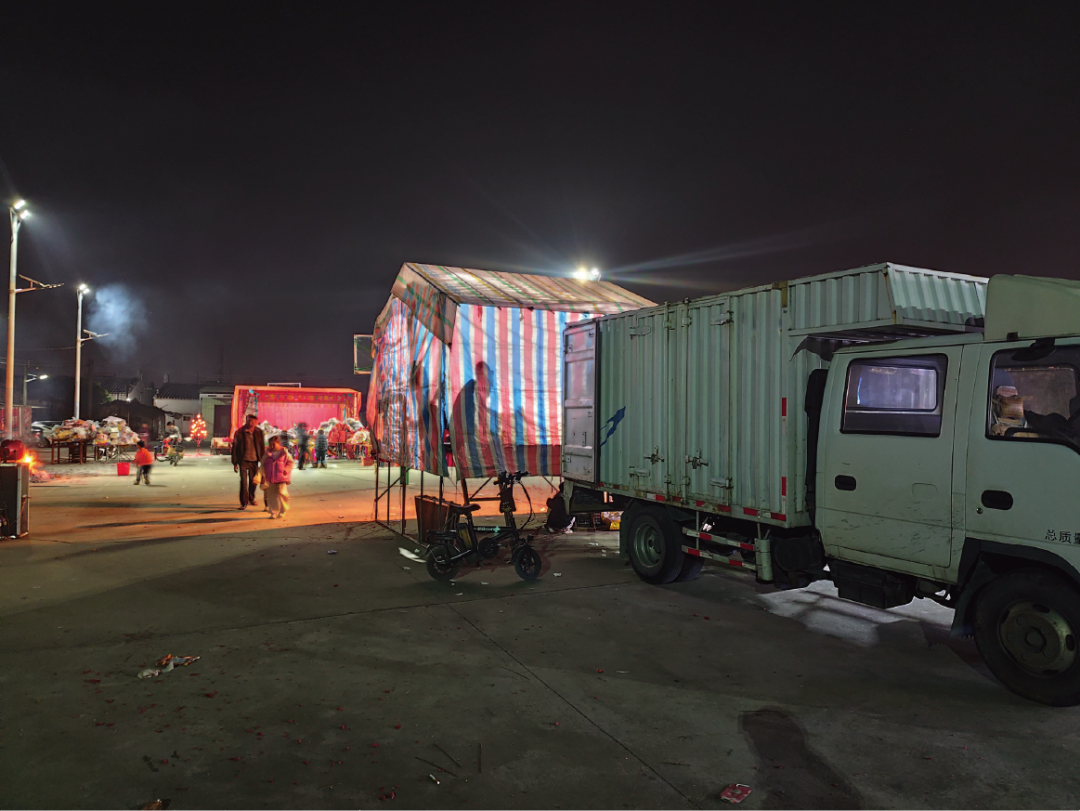
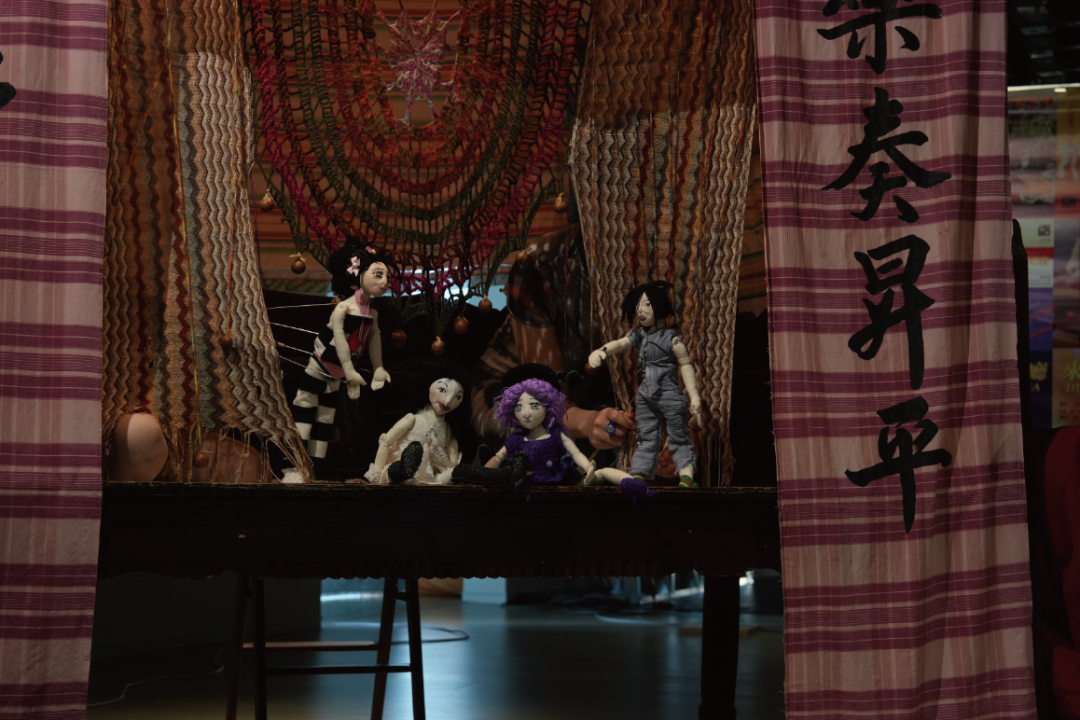
Building on the survival wisdom of traditional Chaoshan opera troupes, “Shanzhai” is Dongcun Xinfu Experimental Theatre’s core methodology. They learn from Chaoshan opera, a centuries-old Chinese theatrical tradition whose travelling, semi-nomadic performers carried their costumes, instruments, and stage props in a handful of trunks, moving from village to village and constructing temporary stages wherever they arrived. While shanzhai is often understood through the lens of imitation or copying, Dongcun Xinfu approaches it as a grassroots spirit of adaptation, resourcefulness, and collective self-organisation. Like forms of para-content that circulate around, reinterpret, and extend existing content, the shanzhai troupe treats performance not as a fixed original but as something continually remade through movement, encounter, and local participation. This mobile way of life remains a vital link connecting contemporary descendants with histories of maritime migration and cultural exchange.
Dongcun Xinfu Experimental Theatre produces performances within different locations and communities through continuous travel, open recruitment, temporary stage-building, and local collaboration. Members of the troupe often occupy multiple roles, becoming puppeteer-carpenters, musician-drivers, or writer-cooks. Alongside its artistic practice, the troupe operates through what it calls a “Drifting Economic Model,” establishing local cycles of workshops, handicraft production, and performance that make labour visible and directly compensated. In this model, artistic production and livelihood are not treated as separate spheres but as mutually sustaining forms of collective practice. In Shanghai, the Theatre will recruit a new troupe through the summer Shanzhai MFA programme, with an open call launching in July. Participants will collectively form a temporary troupe, learning, rehearsing, and performing together as part of an evolving experiment in collaborative theatre-making.
Dongcun Xinfu Experimental Theatre is an open, itinerant performance collective originating from Dongcun Village in Jieyang, China. Centred on the lives and experiences of women in county towns, the collective transforms traditional performance forms into platforms for contemporary expression. Drawing inspiration from Chaoshan Iron Rod Puppetry, folk rituals, and the working methods of the Jieyang-based Xinzhengshun Puppet Troupe, Dongcun Xinfu traces a lineage in which Chaoshan puppet theatre itself emerged as a condensed adaptation of live opera.
Following this logic of “producing through imitating,” the collective embraces Shanzhai not simply as copying, but as a vernacular methodology of adaptation, improvisation, and reinvention. One early project transformed the empty bed left by a Chaoshan grandmother in Dongcun into an intimate, portable puppet theatre—a narrative space parallel to everyday reality that carried the stories, memories, and lived experiences of village women.
Miaozi, one of the initiators of “Shanzhai MFA”, has been actively involved in the ceremonies, performances, and experiments of the project. She has also initiated art practice projects such as “New Women in Dongcun”, “Love as a Club”, and “Urban Qilin”. These practices take the so-called “DIY traditional customs” as the method path, based on grassroots cultural production methods, relying on collective participation and local knowledge to reshape existing cultural forms, and continuously reconstruct traditional customs, local opera, and local folk culture.